To kill a Mockingbird

To kill a Mockingbird

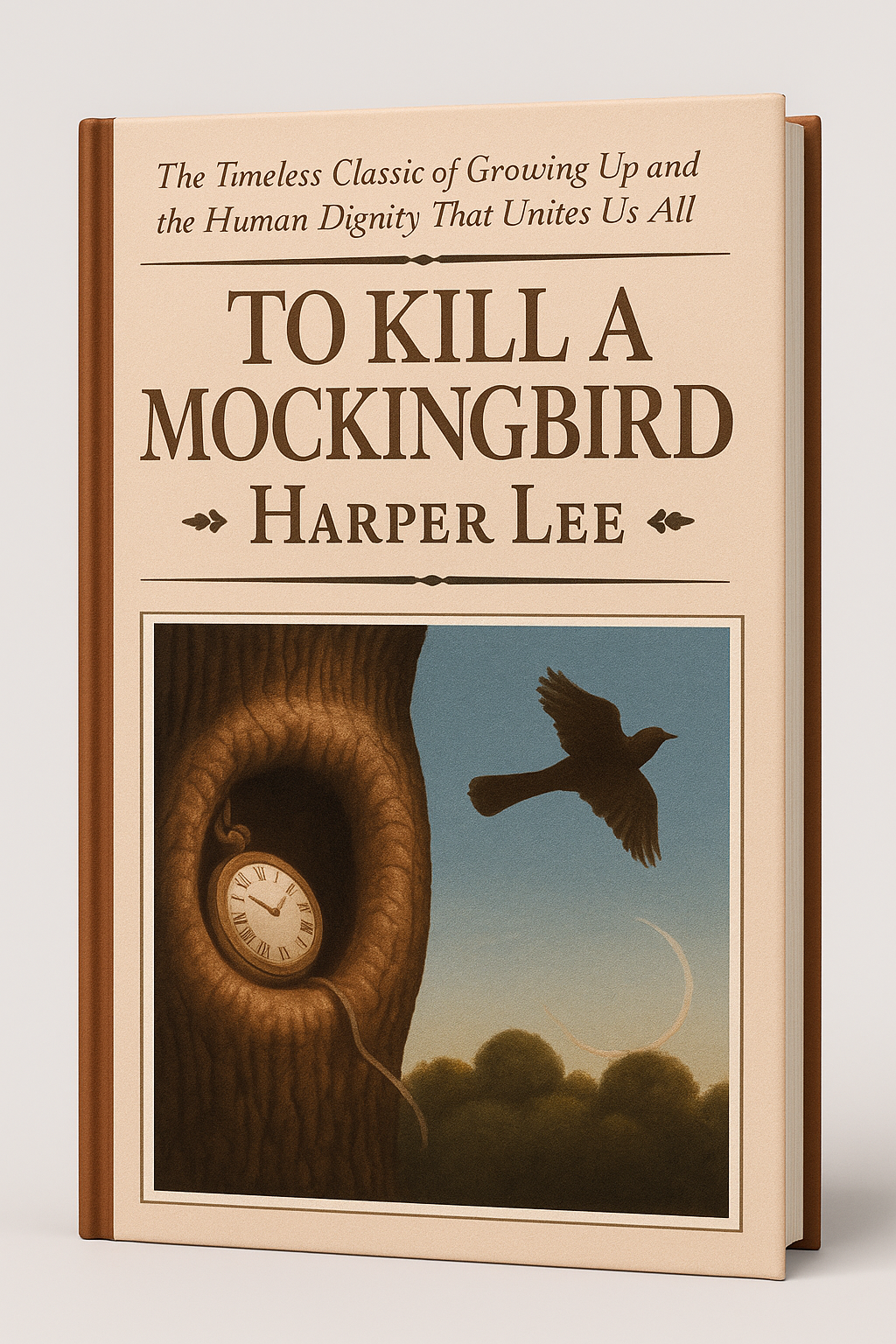
To kill a Mockingbird is Harper Lee’s Pulitzer Prize-winning novel of 1960: through the eyes of Scout Finch, a small Southern town confronts conscience, courage and racial injustice — the book that generations of readers name as the one that changed them.

Few novels live two lives; this one does. It is at once a beloved coming-of-age story — children, summers, a mysterious neighbour — and a moral landmark whose courtroom heart still frames how the English-speaking world talks about standing up for what is right.

It is made for students meeting the novel in school, teachers who teach it, book clubs, and any reader who has somehow not yet spent a season in Maycomb.

To kill a Mockingbird

Published in 1960 and awarded the Pulitzer Prize the following year, Harper Lee’s only novel for over half a century became one of the best-loved books in the language. Its narrator, Scout Finch, recalls childhood in the fictional Maycomb, Alabama, during the Great Depression: games with her brother Jem and their friend Dill, fascination with the reclusive Boo Radley, and — at the story’s grave centre — her father Atticus Finch’s defence of Tom Robinson, a Black man falsely accused in a town structured by racial prejudice. The novel’s achievement is the union of its two plots: the children’s education in empathy and the town’s failure of it, each illuminating the other. Atticus’s closing argument and Scout’s final acts of understanding have entered the culture’s conscience; the book is a fixture of school curricula across the English-speaking world, regularly taught, debated, challenged and defended. Its themes — conscience against conformity, the innocence of mockingbirds, courage defined as knowing you’re licked before you begin — reward every rereading at every age. This edition serves the student annotating for examinations, the teacher building a term around it, and the common reader finally keeping the appointment everyone else kept years ago.

About This Book

This is Harper Lee’s To Kill a Mockingbird (1960), the Pulitzer Prize-winning novel narrated by Scout Finch — a coming-of-age story and courtroom drama set in Depression-era Alabama, centred on Atticus Finch’s defence of Tom Robinson.

What Readers Will Find

Maycomb Through a Child’s Eyes

Scout, Jem and Dill; summers, schoolyards and the Radley mystery — a childhood rendered with humour and exactness, against which the adult world’s injustices slowly come into focus.

The Trial at the Centre

Atticus Finch’s defence of Tom Robinson — the novel’s moral engine — and its aftermath: a study of conscience, courage and a community’s failure that still anchors classroom discussion worldwide.

Themes That Endure

Empathy as education (“walk in his shoes”), innocence and its destroyers, courage redefined, and conformity’s cost — the ideas that keep the novel on curricula and in arguments.

Key Features

The double structure is the distinction: a children’s story and a moral landmark in one narrative, each deepening the other. The voice is the second — Scout’s narration, funny and grave by turns — and the cultural footprint the third: Pulitzer Prize, canonical status, and Atticus as literature’s most cited conscience.

Who This Book Is For

It is for secondary and university students studying the novel, English teachers, book clubs, and general readers — including the many who read it young and return to find a larger book than they remembered.

How to Use This Book

Students: read once for the story, then again with a pencil — track the mockingbird motif and every lesson Scout is taught. Teachers will find the trial chapters and the final Boo Radley sequence the twin pillars for discussion plans. First-time readers should resist summaries: the novel’s power is in Scout’s pace of discovery, which should be the reader’s too.

Related Books

Course English reading is Oxford Progressive English Grade 7. Building vocabulary through pictures is Bildworterbuch Deutsch Die 2000 Wichtigsten Worter Satze Situationen im Alltag.

Download More pdf Files

Leave a Comment

Your email address will not be published. Required fields are marked *

Scroll to Top