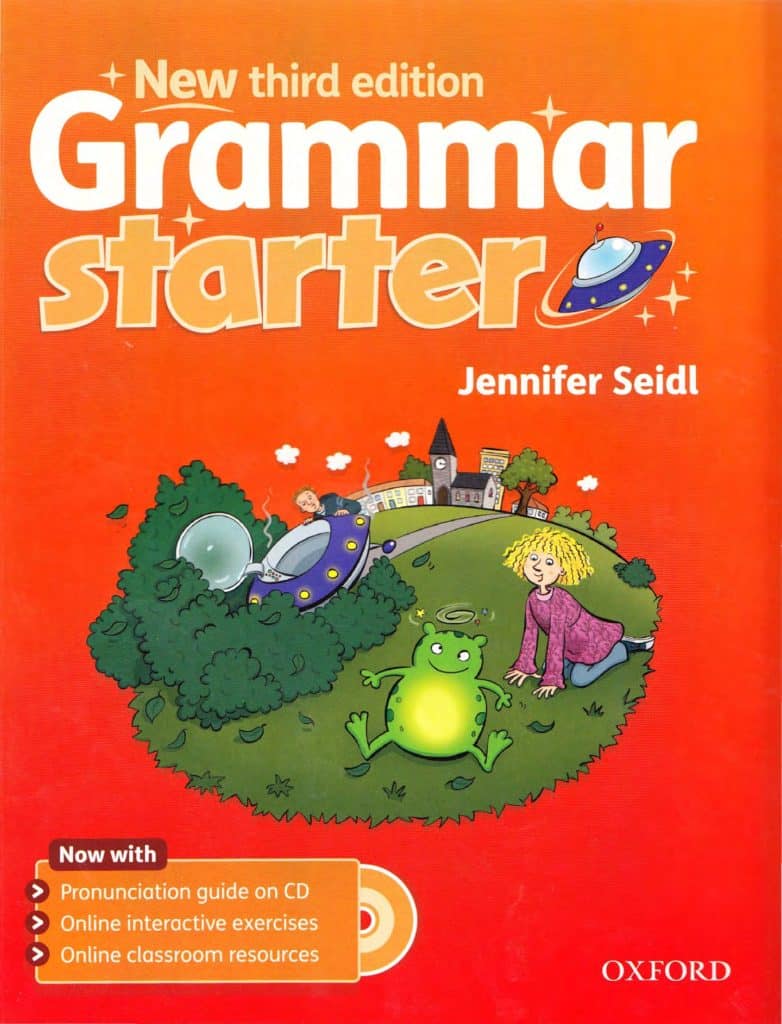
About This Book
Grammar Starter is the entry volume of its grammar shelf. The destination page is headed with this post’s exact title, and the file it serves, ‘Grammar Starter.pdf’, carries the same name exactly — the same volume under the filename the site serves it by. The book’s work is the first encounter: English grammar introduced at starter scale, in steps small enough to succeed at and clear enough to build on.
First encounters are destiny in miniature. A child’s earliest structured meeting with grammar quietly decides their story about the subject — whether rules feel like a game with winnable rounds or a wall with their name misspelled on it — and that story, once filed, is remarkably hard to appeal. The starter book’s design is therefore a study in managed success: steps sized so that effort converts to achievement within minutes, language wrapped around the child’s own world, and accuracy introduced as a form of pride rather than policing. Teachers of the youngest learners know the craft is invisible when it works: the page that looks like play is doing the heaviest lifting on the shelf, because it is building the learner who will one day open the advanced volumes unafraid. Parents choosing a first grammar book are really choosing that story. The starter also sets the family’s expectations: homework that ends in smiles gets defended at the kitchen table, and a defended routine survives the whole school year — which is why the gentleness is structural, not decorative. This one tells it kindly, which is to say, correctly.
What Learners Will Practise
Success in Minutes
Learners practise steps sized for quick wins, so effort converts to achievement before attention fades. Early success is not indulgence; it is the mechanism of persistence.
Grammar in One’s Own World
The book practises structures wrapped around the child’s daily life — family, school, play. A rule met at home is a rule that feels owned.
Pride Before Policing
Readers practise accuracy as a source of pride rather than fear of correction. Learners who feel proud of correctness pursue it voluntarily for years.
Key Features
The managed success is the feature: starter steps engineered for early wins. The own-world wrapping is the second — structures in the child’s daily scenery — and the shelf fit the third, the doorway volume beside this list’s Grammar One and the sense series. On this shelf it opens the door here.
Who This Book Is For
Children meeting grammar for the first time are its first audience. Parents form its second readership, choosing a first structured book. Primary teachers make its third, guarding the first impression.
How to Use This Book
Keep sessions short and end on a success, even if that means stopping mid-page by design. Praise the structure, not just the child — ‘you used the past tense perfectly’ teaches twice. Let the learner show off each finished step to someone; an audience is a starter’s best consolidator.
Related Books
The next step stands at Grammar One, and the sense-series fourth book at Grammar Sense Book 4.